

0 Comments Click here to read/write comments
Topics: bulk handling equipment, Bulk Material Handling, bulk material handling equipment, Aero Mechanical Conveyors, bulk material handling systems, Flexible Screw Conveyors, super sack handling
0 Comments Click here to read/write comments
Topics: bulk bag unloader, screw conveyor, auger conveyor, bulk bag discharger, flexible screw conveyor, Bulk Material Handling, super sack unloading system, aero mechanical conveyor, super sack unloader
0 Comments Click here to read/write comments
Topics: bulk solids conveying, mechanical conveyor, Mechanical Conveyors, material conveying system, powder conveyor
0 Comments Click here to read/write comments
Topics: bulk bag unloader, bulk bag discharger, big bag discharger, Bulk Bag Dischargers, bulk bag unloading station, super sack unloading system, bulk bag unloading system, super sack unloader, super sack unloading station
Flexible screw conveyors are widely known as an economical means of screw conveying various dry bulk solid ingredients.
However, they can have a limited range of applications in food plants due to difficult cleanability.
Unlike less sophisticated designs, Spiroflow flexible conveyors can be outfitted with unique features specifically designed for food processing applications like quick release housings and casings.
As a result of these unique food application design features, Spiroflow flexible screw conveyors are used in over 200 snack food plants worldwide... and that is only one of the many food processing applications for which Spiroflow flexible screw conveyors are ideally suited!
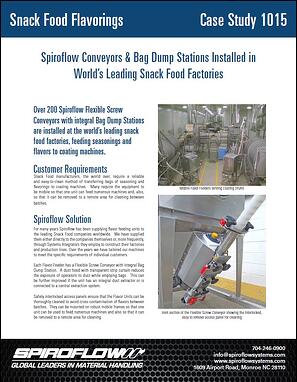
Learn more about Spiroflow flexible screw conveyors in snack food plants by clicking on the image below!

1 Comment Click here to read/write comments
Topics: screw conveyor, auger conveyor, snack food, Spiroflow Systems, flexible screw conveyor, flavoring
April 15, 2013 - Charlotte, NC – Spiroflow Systems, Inc. announces the recent acquisition of the assets of Control & Metering of Mississauga, Ontario, Canada. The company, known for their bulk material handling equipment, had filed for bankruptcy on March 20, 2013. Spiroflow Systems acquired all company assets on April 12, 2013.
Spiroflow Systems Chief Operating Officer Cary Moore, and Vice President of Sales & Marketing Mathias Lee concur, ‘We are excited about the ability to further solidify our position as the industry leading provider of material handling solutions with the addition of Control & Metering’s patented Bulk Bag Filling and Discharging technology. This, coupled with an expanded presence in Canada will allow us to broaden our sales, engineering, manufacturing and services capabilities for our continually growing global customer base.’
Spiroflow Systems will open operations in the Toronto Area under the name ‘Control & Metering, A Spiroflow Company.’ Spiroflow hopes to retain key company personnel to ensure a seamless transition for both companies’ customers.
For over 40 years, Spiroflow has designed, engineered and manufactured its industry leading line of material handling solutions. A worldwide supplier of powder handling engineering and equipment, Spiroflow offers the industry’s most comprehensive line of mechanical conveying equipment with a wide range of standard and custom options for both small and large volume users. Products include bulk bag dischargers and fillers, flexible screw, aero mechanical, tubular cable drag, tubular chain drag and pneumatic conveyors, box, sack and drum dump stations, and the ‘Pacepacker’ range of automatic packing, pick and place and robotic palletizing solutions.
For More Information Contact Spiroflow Systems at 704.246.0900
1 Comment Click here to read/write comments
Topics: bulk bag discharging, Spiroflow, Control and Metering, bulk bag filling
Control and Metering Limited is pleased and proud to announce two new product lines:
- Material handling conveyors
- Raimo Big Bag Dispenser
Material Handling Conveyor Systems, Equipment and Parts
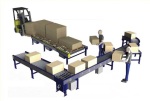 Control and Metering now offers its own extensive line of material handling conveyors and related equipment, parts and systems. Products include:
- Roller conveyors
- Belt conveyors
- Chain conveyors
- Slat conveyors
- Table top conveyors
- Lineshaft conveyors
- Gravity conveyors
- Vertical conveyors and lifts
- Pallet dispensers and pallet stackers
- Scissor lifts
- Custom designed material handling and conveyor systems
- Spare parts for many/most makes of conveyor equipment
Raimo Bulk Bag Dispenser
 The Raimo is an inexpensive and easy way to discharge bulk bags up to 1,000 Kg. Designed for both agriculture and industrial applications where free flowing, granular type ingredients like fertilizer, seed, fish feed, plastics and others are shipped in bulk bags.
Simply twisting the Raimo into the side of a bulk bag near the bottom of one side panel allows the operator to easily dispense ingredient.
The manual slide gate valve integrated into the Raimo's unique design allows the operator to regulate the flow and dispense only as much ingredient as is required. Closing the integral valve allows the easy and safe storage of unused ingredient in the bulk bag.
1 Comment Click here to read/write comments
Topics: roller, belt, lineshaft, seed, fertilizer, feed, conveyor, conveyors, slat, raimo
0 Comments Click here to read/write comments
Topics: conveyor, Bulk Material Handling, aero mechanical conveyor, Aero Mechanical Conveyors, coffee conveyor
One of the most overlooked keys to bulk bag filling success is training. This post reviews how properly trained operators facilitate a much more productive bulk bag filling operation.
Preparing the bulk bag for rigging.
On the surface rigging an empty bulk bag to a piece of filling equipment appears simple indeed: attach the four loops and the inlet spout and that’s it. 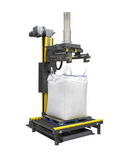
Of course, those are the basic tasks, but how an operator accomplishes these tasks determines whether it is a minutes long struggle or a 30 second or less fast task.
Properly preparing the bulk bag to be rigged is the first, absolutely critical, step to minimizing bulk bag rigging time and hassle.
While a bulk bag is being filled the operator should prepare the next for rigging. Preparation involves the following steps:
- Unfold the bulk bag and expand it by stretching out the top corners.
- Unfold the inlet spout. Many operators find that folding over the lip of the inlet spout to form a collar makes it much easier to slide the spout over the fill head.
- Place the bulk bag within easy reach of the rigging position.
Rigging the bulk bag.
There is a simple and effective way to minimize motion and time when rigging a bulk bag.
- When the bulk bag filler is ready for a bulk bag to be rigged, pick up the bulk bag with the aft loops on each side held in each hand.
- Rig the aft loops first.
- Then rig the front loops.
- Only then should the inlet spout be slid over the bulk bag filler’s fill head.
Rigging a bulk bag in this sequence guarantees that the operator does not have support the full weight of the bag and wrestle with it during rigging.
Average operators can easily rig a bulk bag in 30 seconds or less following this procedure.
Using bulk bag filling equipment.
Generally, bulk bag filling equipment is easy to use when initiating a filling cycle.
However, in any operation things go wrong occasionally and operators who have been trained to properly suspend the filling operation in mid-bag and re-start the filling process after the problem has been solved minimize lost productivity.
There are times when bulk bag filling must be aborted mid-bag (due to upstream problems or a host of other reasons). Again, operators who know how to safely abort bulk bag filling and remove a partially filled bulk bag minimize down time.
Tying Off The Bulk Bag Inlet.
Many bulk bag filling operations can instantly made more productive simply by tying off the inlet spout outside of the filler instead of within it.
When a bag has been filled and is ready to be removed from the filler do not tie off the inlet spout before the bag is removed.
Instead, remove the bulk bag, rig the next and start the filling cycle, then tie off the spout of the bag that was just removed from the filler.
This applies to both automatic bag removal and forklift removal systems. Immediately initiating the next fill cycle and then tying off the just-filled bag is always the most efficient method - even if the forklift operator has to wait for the filler operator to tie off the inlet.
Operators trained to accomplish these simple tasks will consistently perform to a higher level of productivity.
0 Comments Click here to read/write comments
Topics: bulk bag filler, bulk bag rigging, bulk bag filling, training
Read on to learn how to fill lined bulk bags.
Typically, bulk bag liners are made from polyethylene film and are, in effect, ‘inner bags’ that are placed within a bulk bag or FIBC. The product contacts the liner not the bulk bag.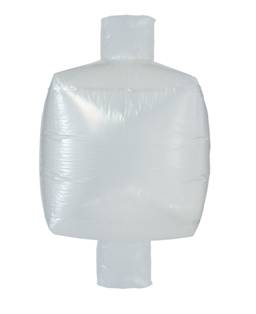
There are generally two types of liners: loose and form fit.
- Loose liners: a cylinder of PE film that is stuffed into the bag. Loose liners are occasionally glued to the bulk bag.
- Form fit liners: a PE film ‘container’ that looks just like a bulk bag (four sides, top and bottom, inlet and outlet spouts) that is placed within the bulk bag. Often, form fit liners are attached to the bulk bag by various methods including tabs that are sewn into the top (and sometimes bottom) seams of the bag.
Filling Bulk Bags with Loose Liners
The most critical factor in filling a bulk bag with a loose liner is to ensure that the liner has expanded and ‘taken’ the cubic shape of the bulk bag before it is filled. Otherwise, there is a high probability that the unexpanded loose liner will have folds in it that the product will fill over thereby making it extremely difficult (if not impossible) to discharge.
Blowing air into the liner, generally referred to as inflation, is the quickest and easiest method to expand a loose liner. A fan blower can be used or a device called an eductor connected to a source of compressed air that draws in ambient air are the two most common inflation methods.
The other consideration when filling loose liners is to allow the inlet of the liner to slide down as the bag is being filled while still maintaining a secure grip. If the liner inlet is held so that it cannot move it is highly likely the top corners of the bag will not be filled because the liner will form a peak extending from the fill head where it is clamped to somewhere down the sides of the bag. In this case it would be impossible to fill the bag to target weight unless the bag is significantly oversized.
Filling Bulk Bags With Form Fit Liners
If your bulk bag filler is designed so that the bulk bag rests on a pallet or other flat surface throughout the filling cycle even bags with form fit liners that are attached to the outer bulk bag should be inflated. Otherwise, as with loose liners, the bag may be folded or creased in such a way that the product will fill over the folds or creases thereby impeding discharge and the ability to completely fill the bulk bag.
However, if your bulk bag filler features ‘hang filling’ where the bulk bag spends part of the filling cycle hanging suspended from its loops, inflating form fit liners is unnecessary.
0 Comments Click here to read/write comments
Topics: big bags, bulk bag liner, form fit liner, bulk bag, loose liner

