5 Ways to Reduce Bulk Bag Packaging Cost

Posted by Don Mackrill on Thu, Aug, 13, 2009 @ 10:08 AM

In previous posts we have discussed reducing shipping costs and the benefits of replacing or eliminating pallets.

In this week's post let's discuss all of the ways that the cost of bulk bag packaging can be reduced.

  1. Reduce bulk bag size.  Reducing the height of a bulk bag by 10% decreases its price by roughly 5%.  Maximum densification, for example using the cone table densification system, can almost always decrease bag height by 10% - sometimes by as much as 40% or more.
  2. Eliminate baffles.  If your bulk bags have internal baffles and they are being used to enhance stability, it is highly likely you can eliminate them by using a densification system designed for maximum results.  Getting rid of baffles can save as much as $5 per bag.
  3. Use coated bulk bags.  If you use liners in your bulk bags you may be able to eliminate them and use coated bulk bags instead.  See the blog post "Bulk Bag Liners - When To Use Them... or Not!" for an excellent review on when to use liners and when not to.  Switching from a liner to a coated bulk bag can save as much as $2 -$3 per bag.
  4. Replace wooden pallets with plastic channels.  Using plastic pallet replacement channels can reduce direct packaging cost and logistics related costs too.  See the blog post "Eliminate Wood Pallets - Ship Bulk Bags Without Wood Pallets" for details.
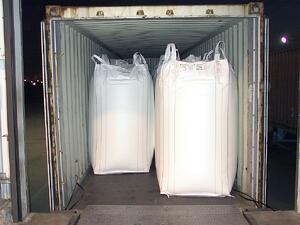
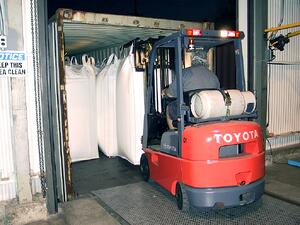
  5. Eliminate wooden pallets.  Properly designed and filled bulk bags can be handled only by using their lifting loops thereby eliminating pallets - and their cost - completely.  See the blog post "Pallet Free Bulk Bag Handling" for details.

As you can see from there are numerous ways to significantly reduce the cost of your bulk bag packaging.
Topics: bulk bag filler, coated bulk bags, bulk bag loading, bulk bag densification, bulk bag loader, bulk bag, bulk bag handling, bulk bags, bulk bag filling, fibc, fibcs, pallet, pallet replacement channel, pallet channel, liners, bulk bag liners, bulk bag optimization, shipping cost, packaging cost

Reduce Bulk Bag Shipping Cost

Posted by Don Mackrill on Thu, Aug, 06, 2009 @ 16:08 PM

How can bulk bag users reduce shipping costs?

The bulk density of your product determines the opportunity for shipping cost savings.

If your product is heavy enough to weigh-out a shipping container/trailer then, as we have seen in the last two posts, replacing wood pallets with a plastic channel replacement system or simply eliminating bottom support altogether can significantly reduce shipping costs.  Reducing the weight of packaging per shipment means you can replace the weight reduction with product thereby shipping out more product per container and reducing shipping cost per pound.

However, if your product's bulk density is such that you can't weigh-out a container/trailer there is an additional step you can take to minimize shipping cost.

Bulk Bag Densification Increases Payload

Light products such as wood flour, fluff carbon black, fumed silica and the like react favorably to certain types of densification.  This means that the payload of a given size bulk bag can be increased.  Increasing the bulk bag payload increases the amount of product that be shipped per container thereby reducing shipping cost per pound.

Low bulk density bulk solids tend to trap air between their particles. Depending on the particle shape it can be very difficult to remove the air while the bulk bag is being filled. Bulk bag filler densification systems are designed to remove the trapped air thereby densifying the product.

Some densification systems are more effective than others. Carefully matching the method of densification with the product characteristics can result in a significant improvement in packed bulk density thereby increasing payload.

Bulk Bag Densification Reduces Shipping Cost

As a starting point it is reasonable to assume that a densification system capable of maximum compaction should be able to increase payload weight by a minimum of 10%.

Control and Metering's experience is that payload increases of 20-30% are often achievable and in some cases as much as 40%+ more weight can put in a bulk bag that has been previously filled without densification or with ineffective densification systems.

Topics: bulk bag filler, bulk bag loading, bulk bag densification, bulk bag, bulk bag filling, pallet, wood pallet, pallet replacement channel, shipping cost

Pallet Free Bulk Bag Handling

Posted by Don Mackrill on Thu, Aug, 06, 2009 @ 12:08 PM

Are Pallets Necessary?

Pallets are used to move heavy objects. Forklifts or pallet trucks are used to move them. In the case of bulk bags however, there is a built-in alternative to using a pallet or bottom located lifting device to move them: bulk bag lifting loops.

Every bulk bag has lifting loops that are designed to safely lift the bag and its contents. They can be used to move the bag from the filling station to storage into and out of a shipping container and everywhere in between.

So, technically, a bulk bag does not require a pallet or equivalent.Pallet free bulk bags

Checklist for Handling Bulk Bags Without Pallets

Bulk bag filling equipment. Before you can safely handle bulk bags without pallets you must ensure that your equipment is designed to allow the bag to be removed from it without a pallet. Bulk bag fillers can be designed to release the lifting loops while still supporting the bulk bag thereby allowing the bag to be removed by threading the fork tines through the loops. Note that you must have a forklift to remove the bulk bag from the filler - a pallet truck won't work.

Bulk bag design. The bulk bag loops must be 'cross corner' design and the must be designed to stand up right on their own. Both of these features make it easy to thread the fork lift tines through the loops without assistance. Cross corner refers to loops that are sewn on side of the bag and looped over the corner and sewn on the adjacent side. This provides a 'tunnel' for the forklift driver to aim for. Of course, the loops must stand up on their own to make the tunnel. This is done by sewing a strip of plastic within the loop to give it rigidity.

Sanitary considerations. Since the bottom of the bulk bag comes in direct contact with the floor - of your plant or warehouse and the shipping trailer/container - it is often advisable to add a protective flap across the entire bottom of the bag to minimize contamination and provide an extra layer of fabric for added robustness. The flap is sewn along one edge, drawn across the bottom of the bag and attached to the opposite side using Velcro or loops and ties.

End user capabilities. While shipping bulk bags without bottom support has many benefits for the producer, it is a catastrophe for an end user without a forklift. Your customers have to be prepared, willing and able to work with your product in bulk bags without pallets.

Shipping Bulk Bags without Pallets - Is It Really Feasible?

Short answer: yes. Although a small percentage overall, there are many bulk bags beingLoading pallet free bulk bags shipped without pallets. For example, export shipments of various products that travel via shipping containers are often shipped without any kind of bottom support. In North America, one of the resin industries converted from boxes to bulk bags now all domestic production of this type of resin is shipped in bulk bags without bottom support.
Palletless Bulk Bags - Benefits

Shipping without a pallet or any bottom support is a lucrative proposition. A number of operatic cost saving opportunities immediately occur:

  1. Eliminate pallet cost.
  2. Reduce shipping cost. Removing the weight of the pallet from each shipped package means you can increase the payload weight of each bulk bag. This can significantly reduce the shipping cost per pound of product.
  3. Reduce handling labor. Not having to manage the handling of heavy pallets increase productivity and reduces packaging labor cost per pound.
  4. Increase warehouse efficiency. Not having to store pallets can significantly increase available warehouse space.
  5. Eliminate border crossing delays. Borders crossing delays often occur because palleted shipments may be inspected. Additional time (money) can be lost if documentation has to be resubmitted or modified.
  6. Improve sustainability.  Eliminating pallets and any kind of bottom support clearly improves sustainability by reducing the use of material and waste.

Shipping bulk bags without bottom support is feasible, is already being done and can dramatically reduce operating costs.

Topics: bulk bag filler, bulk bag loading, bulk bag, bulk bag handling, bulk bag filling, pallet, wood pallet

Eliminate Wood Pallets - Ship Bulk Bags Without Wood Pallets

Posted by Don Mackrill on Tue, Jul, 21, 2009 @ 16:07 PM
ISPM 15 - the international regulation stipulating global wood pallet use - has caused a significant change in wood pallet usage.

Wikipedia describes ISPM 15 as the:

"International Phytosanitary Measure developed by the IPPC that directly addresses the need to treat wood materials of a thickness greater than 6mm, used to ship products between countries.  It affects all wood packaging material (pallets, crates, dunnage, etc) requiring that they be treated with heat or fumigated with methyl bromide and marked, often branded, with a seal of compliance. "

Wood Pallet Cost Rising

As a result, the total cost of wood pallet usage has escalated dramatically.  Not only has the cost of ISPM 15 compliant pallets increased, shipping documentation preparation and possible border crossing delays consume additional time and resources. 

That coupled with historic problems related to mold growth, damage to shipped product from pallet defects (splinters, nails, etc.) and the outright refusal of some countries and/or customers to accept wood pallets has caused a strong desire to find a wood pallet alternative.

Bulk Bag Solution

If you ship your product in bulk bags there are two solutions that Control and Metering can recommend:

  1. Plastic pallet replacement channels.
  2. Shipping bulk bags without any kind of pallet-like support.

Plastic Pallet Replacement Channels

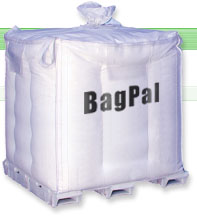
We have had extensive experience with BagPal channels.  These are designed to slip into sleeves attached to the bottom of specially made bulk bags allowing the bulk bag to be handled by a forklift just like a bulk bag on a wooden pallet.Bulk bag with BagPal channels

BagPal channels are robust, compare favorably price-wise with treated wood pallets and can be reused and recycled.

Also, they provide a traditional means of moving bulk bags with a forklift - any forklift with standard tines can be used to move a BagPal equipped bulk bag.

Plus, a pair of BagPal channels weighs less and is much smaller than a wood pallet.  These features provide two significant financial benefits:

  1. Reduce shipping costs by increasing your bulk bag payload by the difference in weight between a pallet and the channels - roughly 30+ lb. Higher payload per bag equals more product in a truck or container.
  2. Increase warehouse efficiency by using MUCH less space to store empty channels vs. empty pallets.

Bulk Bags Minus Bottom Support

Bulk bags can be shipped without bottom handling support of any kind.  This has been done in a number of industries for both domestic and export delivery to customers.

Without bottom handling support bulk bags must be lifted using their loops.  Preventing damage and contamination of the bag bottom is also required.

Specially designed bulk bags with unique lifting loops and protective bottom panel barriers solve these issues. 

Shipping bulk bags without bottom handling support is a topic by itself and will be the topic of next week's blog post.

Topics: bulk bag, bulk bag handling, bulk bags, ISPM 15, fibc, fibcs, pallet, wood pallet, pallet replacement channel, pallet channel

Porthole Style Bulk Bags - 3 Key Factors To Success

Posted by Don Mackrill on Wed, Jul, 01, 2009 @ 17:07 PM

Ever heard of a 'porthole' style bulk bag?  If you haven't we'll fill you in.  If you have, and you're having problems with them, we'll list what you need to know.

A porthole bulk bag has a porthole in its bottom.  A flat bottom liner is inserted into the bag and filled.

Porthole syle bags are discharged using a bulk bag unloader that features a 'knife' to cut the liner through the porthole. 

  1. Stuff the liner properly.  One of the key benefits of using porthole style bags for in-house use (you fill and empty the bags within your plant) is that the outer bulk bag can be reused by simply discarding the old liner and stuffing a new one into the bag.  However, unless the liner is properly reinserted, twists or folds can occur that will prevent the liner from being easily cut by the discharger.  This can lead to shredding of the liner - resulting in downstream product contamination - or a badly twisted or folded liner can seriously impede or even prevent easy product discharge.  Work with your bag/liner supplier to develop a Standard Operating Procedure to ensure the liner is properly inserted.

  2. Keep the knife sharp.  This advice might seem counter intuitive from a safety perspective.  However, unless the bulk bag discharger knife is sharp you run the risk of tearing the liner instead of cutting it cleanly.  Tearing through the liner can sometimes result in shredding, which in turn can deposit liner material in the product flow.  Product contaminated with liner shreds is a serious problem to be avoided at all costs.

  3. Use the bulk bag discharging equipment properly.  A knife style discharger will have a particular procedure that needs to be followed to ensure trouble free cutting of the liner and complete discharge of the product.  Make sure you confer with your equipment supplier to develop a proper procedure for unloading porthole bulk bags.

Topics: bulk bag, bulk bag discharging, bulk bag handling, bulk bags, bulk bag unloader, bulk bag unloading, fibc, fibcs, bulk bag discharger, porthole bulk bags

‘Spiroflow’ Aero-Mechanical Conveyors – a moving story!

Posted by Cathy Podevyn on Wed, Jun, 03, 2009 @ 16:06 PM

Topics: aero mechanical conveying, aero mechanical conveyor, Aero Mechanical Conveyors

Solidified ingredient in your bulk bags? Find out how to unload them.

Posted by Don Mackrill on Thu, May, 28, 2009 @ 14:05 PM

There is a surprisingly high number of dry bulk solid ingredients that will 'set up' (solidify) when stored in a container.  This can cause significant problems when the container is emptied... the problem being that if the ingredient has solidified enough it simply won't flow!

In the case of bulk bags filled with solidified ingredient, we have encountered many plants who have devised their own solutions to this problem:

  • Hitting the bulk bag with hand held solid objects (pipes, etc.)
  • Bouncing the bag on the floor with a forklift
  • Driving the bag into a wall or column with a forklift

As you can imagine these so-called solutions are usually somewhat less than effective and are most certainly sub-optimal - most importantly they are unsafe.

What to do?

Pre-condition the bulk bag by using a device such as the Bag Squeezer.  Its name nicely describes its function!

By safely breaking up the ingredient prior to attempting to discharge it, productivity will be improved, dusting will be minimized and safety will be dramatically enhanced.

Topics: bulk bag conditioner, bulk bag, bulk bag discharging, bulk bag handling, bulk bag unloader, bulk bag unloading, bulk bag discharger, bulk bag squeezer

Sustainable Packaging - Reduce The Size of Your Bulk Bags

Posted by Don Mackrill on Mon, Apr, 27, 2009 @ 17:04 PM

Looking for ways to improve the sustainability of your bulk bags?

How about reducing their size?

How do you do that?

Do a better job of densifying your product so that it takes less volume for a given weight... and use a shorter bag!

Ideally, the product you put in your bulk bag should be at its maximum packed bulk density when it leaves your bulk bag filler.  If it's not you are using a larger bulk bag than necessary and, more importantly, it may not be safe.

Not all bulk bag fillers do the same job when it comes to compacting or densifying your product.

At Control and Metering we use a 'rule of thumb' that for every 10% you can reduce the height of your bulk bag, the cost reduces by 5%.

So if you can do a better job of densifying your product while it's being filled you're not only lowering your packaging costs you're also improving your packaging sustainability.

A VERY nice win-win!

Topics: bulk bag filler, bulk bag loading, bulk bag loader, bulk bag, bulk bag handling, bulk bags, sustainable packaging, bulk bag filling, fibc, fibcs

3 Ways To Reduce Dusting When Discharging Bulk Bags

Posted by Don Mackrill on Tue, Apr, 07, 2009 @ 16:04 PM

Unfortunately, Dusting is a Common Problem

While bulk bags can be the most economical package for shipping semi-bulk quantities of dry bulk solids, they often get a bad rap from end-users because the process of unloading them can be dusty.

Excessive dusting during discharge obviously causes a mess requiring additional clean up labor.  However, it can cause significant profit reduction because every pound of product that lands on the floor reduces ingredient yield and increases input costs.

Dusting Can Be Costly!

We know of a food manufacturer whose bulk bag discharging stations create a lot of dusting during unloading.  A plant visit confirmed the mess made during bulk bag discharging, but curiously their floors are always spotless!  

The plant has hose bibs EVERYWHERE, which encourages cleaning.  Seemingly a good thing.  

However, a thorough analysis of their ingredient yield showed that they were losing approximately $300,000.00 annually due to poor yield: TONS of product - along with a good chunk of profit - were being washed down the drain!

While it's true that not all of that waste was directly attributable to dusting from bulk bag dischargers, most of it was.

So, not only is dusting during bulk bag unloading a nuisance and housekeeping issue, it can quickly affect - negatively - the bottom line.

What can be done?

  1. Training.  The biggest issue we see with the use of bulk bag dischargers is that operators are not following the manufacturer's operating instructions.  Regardless of the equipment used to unload bulk bags, if it is not used properly optimal dust containment cannot be achieved.  Left to their own devices operators will quickly figure out the easiest way to get product out of the bag - and that often leads to unecessary dust emissions.  Easy operation sounds like a good thing, but the reality of discharging bulk bags is that they require some effort to use properly.  Work with your bulk bag discharger vendor to fully understand how their equipment should be used to best effect and then train and supervise your operators accordingly.
  2. Bulk bag design.  We often see situations where fine product sifts through the fabric of bulk bags.  If that sounds familiar your ingredient vendor should be willing to work with you to provide a bulk bag that eliminates this problem.  The easiest solution is to used coated bulk bags that feature a film of polypropylene bonded to the inner surface of the bag fabric.  This should cure most sifting problems.  However, if a coated bag isn't enough your vendor should be using a separate polyethylene liner.
  3. Bulk Bag Discharging Equipment.  Bulk bag dischargers come in many configurations.  Some are better than others when it comes to dust containment.  Look for designs that allow easy  and safe access to the bag outlet spout while keeping it enclosed in a hopper that can be connected to a vacuum dust collection system.  However, not all of these designs are created equal!  If the hopper that is under negative pressure is filled with product during discharging, dusting will still be a problem when the hopper door is opened and product that has adhered to the inside of the door drops on the floor.  Ideally, the outlet spout of the bulk bag should protrude out of the hopper during discharge so the only time the hopper sees dust is during the initial stage of product flow and perhaps at the end of the discharge cycle.  Ergonomics are also a key criteria when selecting a bulk bag discharger.  As mentioned above, you don't want your operators circumventing Standard Operating Procedures and creating excessive dusting because the bulk bag discharger is too difficult to use properly.  Carefully evaluate dust containment features and ergonomic design when selecting a bulk bag discharger.

Topics: bulk bag, bulk bag discharging, bulk bag handling, bulk bags, bulk bag unloader, bulk bag unloading, bulk bag discharger, bulk solids

A ‘Spiroflow’ Aero-Mechanical Conveyor - 14 years sterling service!

Posted by Cathy Podevyn on Sun, Mar, 08, 2009 @ 16:03 PM

Topics: aero mechanical conveying, aero mechanical conveyor, Aero Mechanical Conveyors